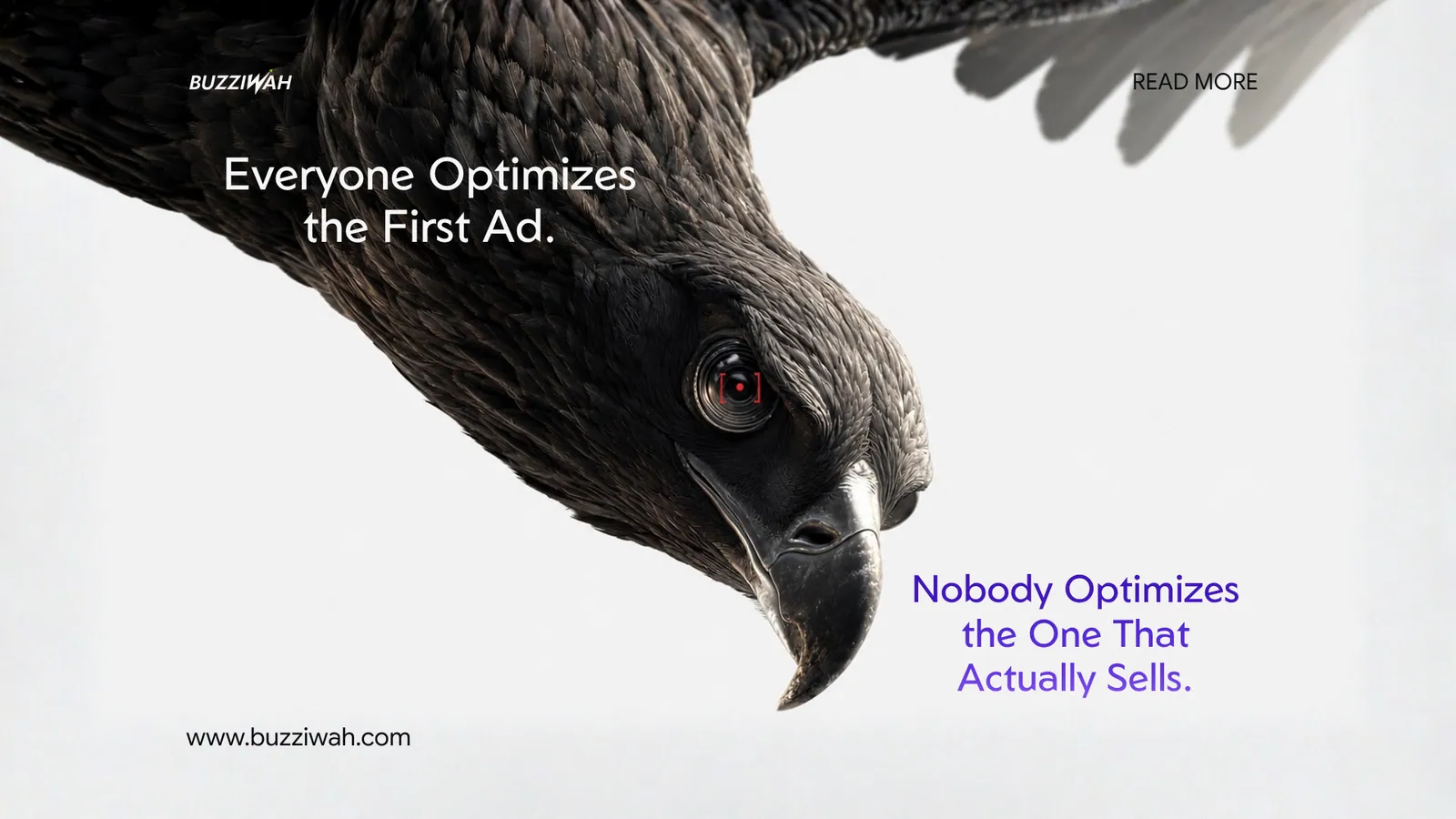
Most businesses obsess over the first ad. The hook, the headline, the thumb-stopping visual. Fair enough — it's the one everyone sees and judges you by. But here's the uncomfortable math: the vast majority of people who see that first ad won't buy from it. Not because the ad failed, but because almost nobody buys anything the first time they see it.
The ad that actually closes the sale is usually the second one, the third one, or the fifth one — the retargeting ad. And most businesses in Bengaluru either skip it entirely or treat it as an afterthought, which means they're paying to attract attention and then walking away right before it pays off.
Why one ad was never going to be enough
Think about your own buying behavior. You don't see a product once and buy it — you see it, get distracted, forget, see it again somewhere else, maybe check reviews, and then decide. That gap between "interested" and "ready to buy" is where most marketing budgets quietly leak out, because the first-ad-only approach assumes interest and readiness happen at the same moment. They almost never do.
Retargeting exists to bridge exactly that gap. It's not a second attempt at the same pitch — it's a different message for a person who's already a few steps further along than a total stranger.
The person who saw your first ad is not a cold lead anymore
This is the part that gets missed most often: someone who visited your site, watched half your reel, or added something to cart isn't in the same category as someone who's never heard of you. Treating them identically — same message, same offer, same tone — wastes the one advantage you've already paid for: their attention.
A retargeting audience already knows:
- Who you are
- Roughly what you offer
- That they were interested enough to click, watch, or browse
Your job in the second ad isn't to introduce yourself again. It's to answer whatever question stopped them from converting the first time — price, trust, timing, or simply "I got busy and forgot."
What actually makes a good retargeting ad
Change the message, not just the audience. If your first ad said "check out our new service," your retargeting ad shouldn't say the same thing louder. It should say "still thinking it over? here's what our last client said" or "here's the offer expiring Friday." Same product, different job to do.
Use social proof here more than in the first ad. Cold audiences don't have context to appreciate a testimonial yet. Warm audiences — people who've already shown interest — are exactly the ones ready to be convinced by "50+ Bengaluru businesses already switched."
Segment by how warm they actually are. Someone who visited your homepage for five seconds is not as warm as someone who added an item to cart or filled half a form. Bucket these separately if your budget allows — a website visitor gets a different ad than a cart-abandoner.
Set a frequency cap. Retargeting badly is worse than not retargeting at all. Nobody converts because they saw the same ad for the fifteenth time — they just get annoyed and associate your brand with being followed around the internet. Cap frequency and rotate creative every 1-2 weeks.
Give it a real deadline or reason to act now. Warm leads stall out for the same reason cold leads do — nothing is forcing a decision today. A limited-time detail (closing slots, an expiring price, a seasonal window) does more work in a retargeting ad than in a first ad, because this audience is already leaning toward "yes" and just needs a push.
The budget math nobody talks about
Retargeting audiences are almost always cheaper to advertise to than cold audiences, because you're not paying to build awareness from zero — you're paying to convert interest that already exists. Which means, ironically, the ad that costs less to run is often the one that closes more of your sales.
A common mistake: businesses pour 90% of their ad budget into cold reach because it feels like more people seen equals more growth. In practice, a modest retargeting budget aimed at the people who already raised their hand often converts at a multiple of what cold ads do — the volume is smaller, but the intent is real.
A simple starting structure
If you're setting this up for the first time, you don't need a complex funnel on day one:
- Cold ad — introduces the offer to a fresh audience
- Retargeting ad, week 1 — speaks to people who visited but didn't convert, using proof/trust content
- Retargeting ad, week 2-3 — adds urgency or a specific incentive for those still on the fence
Three ads, three jobs. Not three versions of the same pitch.
The takeaway
The first ad's job is to get noticed. The second ad's job is to get chosen. Most of the actual revenue in a campaign lives in that second job — and it's the one most businesses skip because it doesn't feel as exciting as launching something new. If your ad spend has a ceiling you can't seem to break through, the fix is rarely a better first ad. It's usually a missing second one.