A Bengaluru clinic we know once spent three weeks building a genuinely excellent patient-education video — scripted, shot properly, edited well. It got 40 views in the first month. Not because the content was weak. Because posting it once to one Instagram feed and calling it done was never a distribution plan — it was a single roll of the dice.
This is the gap almost every service business has, and almost nobody talks about directly: a content plan tells you what to make. A distribution strategy tells you what happens to it after you hit publish — and for most businesses, that second part doesn't exist at all.
What a distribution strategy actually is, and why "post it and see" isn't one
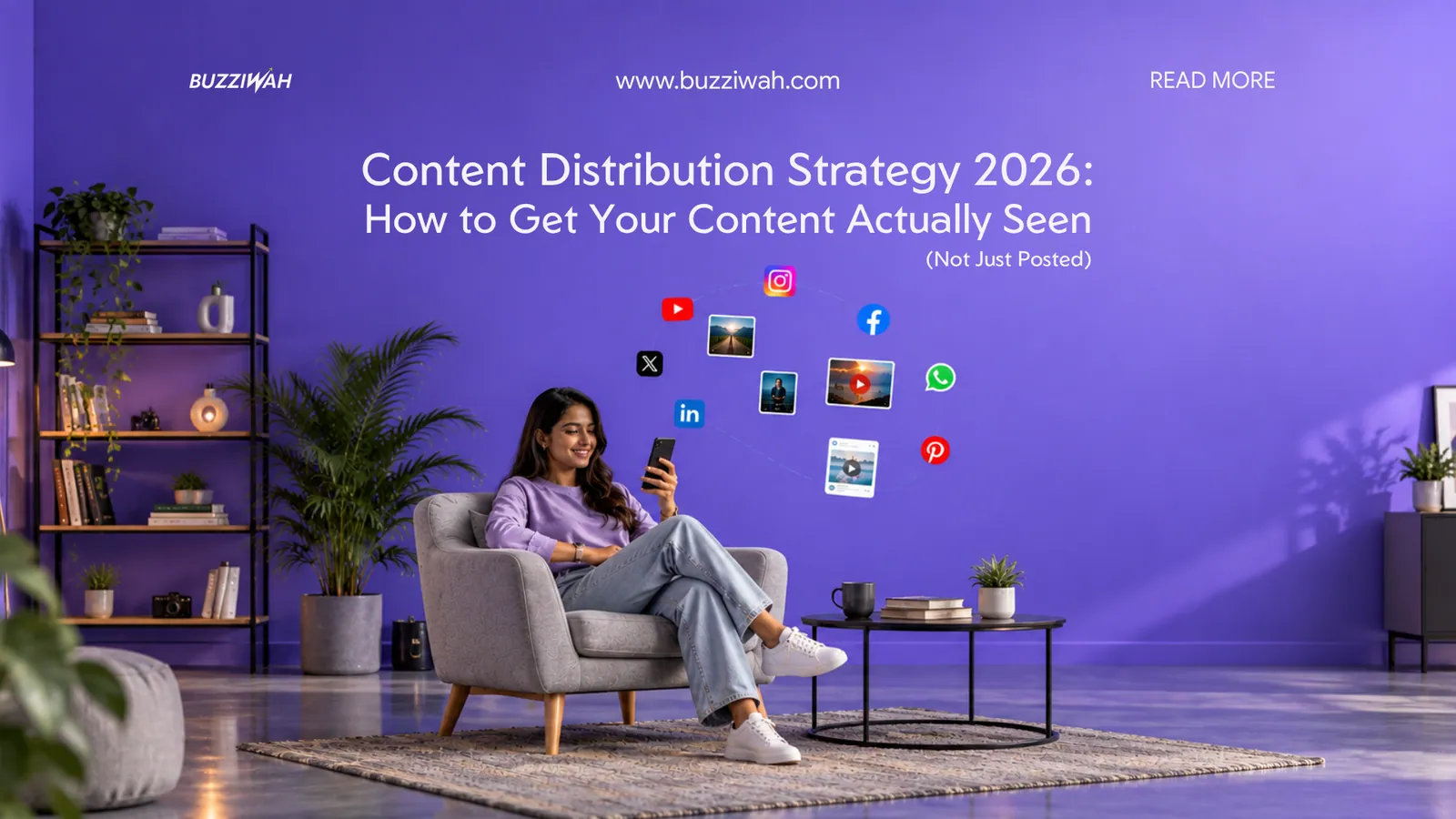
A content distribution strategy is a deliberate plan for how a piece of content reaches its audience — across the channels you control, the channels you earn attention on, and the channels you pay to extend into. It answers three questions most businesses never sit down to answer: who is this actually for, where do they already spend time, and how many different lives can this one piece of content have before it's done working for you.
Without that plan, even strong content is left to whatever the algorithm decides to do with it that day — which, for most platforms right now, is not very much.
Give every channel a specific job, not the same job
The single most useful shift here is realizing that not every channel is trying to do the same thing for your business. Trying to make one Instagram post simultaneously introduce new people to your brand, convince fence-sitters, and re-engage old customers is asking one piece of content to do three unrelated jobs — and it usually does none of them well.
Instead, assign each channel a specific role:
A discovery role — introducing your business to people who've never heard of you. Reels and short-form video tend to do this best for local service businesses, since they get pushed to people outside your existing followers.
A consideration role — helping someone who's already aware of you decide if they trust you enough to book or buy. Blog content, longer YouTube videos, and detailed Instagram carousels do this well, because they give someone room to actually evaluate you.
A retention role — giving existing customers a reason to stay engaged and come back. Email, WhatsApp broadcast lists, and Stories tend to be strongest here, since they reach people who've already chosen you once.
Once each channel has a defined job, deciding what to post where stops being guesswork.
Audit what you already have before making anything new
Most businesses assume their distribution problem is a content-creation problem — "we just need to make more." Often, the opposite is true: there's usually more usable content sitting unused than anyone realizes. Before creating anything new, go through what already exists — old blog posts, past client testimonials, unused shoot footage, FAQ answers already written in old DMs — and flag anything with genuine reuse potential.
A single well-shot client testimonial video, for instance, might already contain a Reel, three quote graphics, an email snippet, and a website trust-signal, all sitting unused inside one existing asset.
Distribute in waves, not a single push
Most businesses treat a new piece of content like a one-time event — publish it, watch it for a day or two, move on. A distribution strategy treats it more like a rollout with its own timeline.
A practical wave structure for a single strong piece of content:
- Day 1 — publish to your owned channels first (email list, WhatsApp broadcast, your own social profiles) to activate the people already paying attention
- Days 2-4 — cut it into platform-specific pieces (a Reel, a carousel, a Story series) as early engagement builds
- Week 2 — repurpose the strongest performing angle into a second wave — a follow-up post, a client-facing recap, or a paid boost behind whatever performed best organically
- Weeks 3-4+ — pull it into evergreen use — a website FAQ answer, a saved Highlight, a line in your sales conversation
This turns one piece of work into weeks of visibility, instead of one day of it.
Where paid spend actually belongs in this sequence
Paid distribution works best as an amplifier for something that's already shown signs of working — not as a substitute for content that hasn't proven itself yet. If a piece is already getting strong saves, shares, or replies organically, that's the signal to put budget behind it, extending reach to people who wouldn't have seen it otherwise. Boosting a lukewarm post rarely fixes the underlying issue — it just spends money finding out faster that the content wasn't the right fit.
What this looks like for a typical Bengaluru service business
Say a restaurant client shoots one strong video of their kitchen prepping a signature dish.
- It goes out first to their WhatsApp broadcast list and email subscribers (owned, Day 1)
- It's cut into a hook-driven Reel and a slower-paced YouTube Short (Days 2-3)
- The best-performing cut gets a small paid boost targeting people within a few kilometers of the restaurant (Week 2)
- Key frames become a permanent Instagram Highlight and a photo on the "About" section of their website (ongoing)
One shoot. Four distinct lives. Most businesses would have posted this once and moved on to planning the next thing.
The mistake underneath most weak distribution
It's rarely a lack of content. It's treating every piece as disposable the moment it's posted, instead of as reusable inventory with weeks of life left in it if it's actually managed. Businesses that create constantly but distribute narrowly are working far harder than they need to for the visibility they're getting.
Where to start this week
- Pick one genuinely strong piece of content from the last few months that only got posted once
- Identify which channel role it could still serve — discovery, consideration, or retention — that it hasn't been used for yet
- Repurpose it into one new format and send it out through an owned channel first
- Watch what happens before spending a rupee on paid — let organic response tell you what's worth extending
The takeaway
Good content with no distribution plan is a single roll of the dice. A real distribution strategy gives that same piece of work several more chances to actually be seen — by the right person, in the right format, on the channel where they're already paying attention. In a year where getting noticed organically keeps getting harder, that plan isn't a nice-to-have anymore. It's most of the actual work.